You must log in or register to comment.
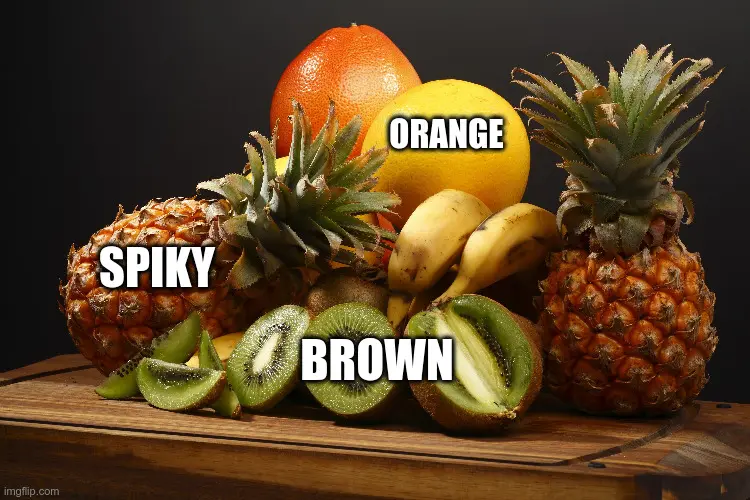
Fun fact: the color orange was named after the fruit, and not the fruit named for the color.
The word ultimately derives from a Dravidian language – possibly Tamil நாரம் nāram or Telugu నారింజ nāriṃja or Malayalam നാരങ്ങ nāraŋŋa — via Sanskrit नारङ्ग nāraṅgaḥ “orange tree”. From there the word entered Persian نارنگ nārang and then Arabic نارنج nāranj. The initial n was lost through rebracketing in Italian and French, though some varieties of Arabic lost the n earlier.
The word “orange” entered Middle English from Old French and Anglo-Norman orenge. The earliest recorded use of the word in English is from the 13th century and referred to the fruit.
Meanwhile, in France:
“What’s the roundish thing we eat a lot?”
“Apples?”
“No, the one that grows underground.”
“Dirt apples?”
iirc an “apple” in both French and English used to just be any fruit. And over time it shifted to mean just the most common one
and you know the french, always very poetic, of course they’ll call a potato a fruit of dirt